

Server Interconnection
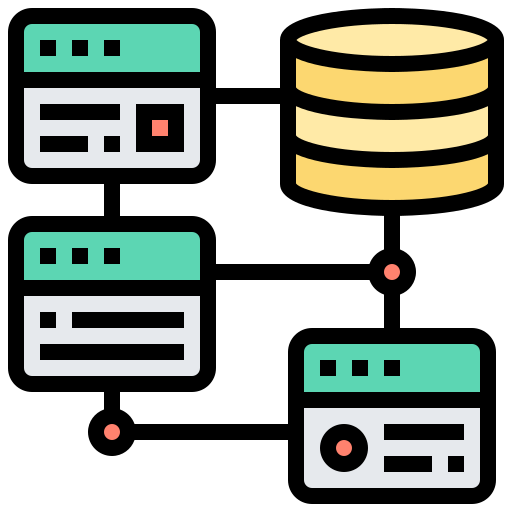
It is the process of connecting multiple servers within an organization’s network to enable them to work together efficiently and share resources. We can ensure to improve performance for critical applications and services. We can serve redundant server configuration with interconnection and ensure high availability. We centralized management interfaces make it easier for administrators to monitor and control multiple servers from one location, simplifying maintenance and troubleshooting. It can lead to cost efficiency and savings in the long run.

Data Sharing and Exchange
We involve creating an infrastructure and implementing practices that ensure seamless and secure sharing of information within and outside the organization. We will help to select and implement data sharing platforms or tools that align with the organization’s needs. We develop clear data sharing policies that outline rules, procedures and responsibilities for data sharing. We ensure that systems and platforms used for data sharing are interoperable with those of external partners or clients. We manage data throughout its lifecycle, including creation, storage, sharing, and eventual deletion.
Load Balancing and Scalability
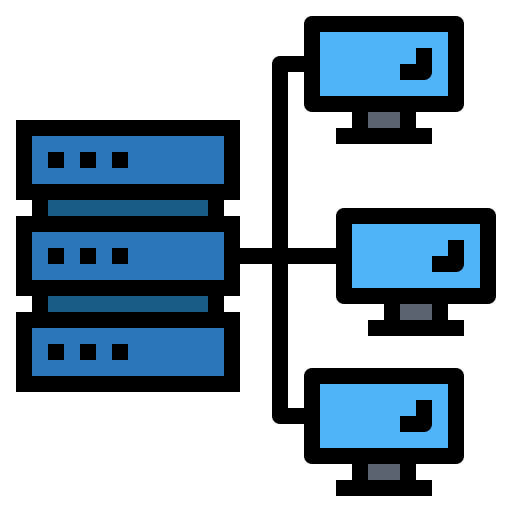
It is a critical service that optimizes the distribution of network or application traffic across multiple servers or resources to ensure efficient and reliable operation. We can prevent overloading of servers. It enhances the overall performance of applications and services, leading to faster response times and better user experiences. We make it easier to scale resources horizontally by adding more servers to handle increased workloads, accommodating growth in users or data. We scale their IT infrastructure by adding more servers to the interconnected network, accommodating increased workloads and business growth.

Server Virtualization
It enables organizations to make more efficient use of their hardware, improve scalability, and simplify IT management. We can assess and plan which servers or workloads are suitable for virtualization. We can choose a suitable hypervisor based on the organization’s requirements, such as cost, performance, and compatibility. We ensure that the existing hardware and software meet the virtualization requirements. We configure and manage resource allocation for VMs, ensuring that each VM gets the necessary CPU, memory, and storage.

Security Measures Management and Monitoring
We implement security measures and access controls to protect interconnected servers and the data. We regularly monitor data sharing activities to detect anomalies and ensure compliance. We use monitoring tools to track resource usage, performance, and VM health. We implement security measures, such as virtual firewalls and network segmentation to enhance the protection of VMs and data.
